Asking the Right Noise Questions for a DC Charger Near Occupied Buildings
Before placing a direct-current (DC) charger beside an office or guest room, ask for noise information that describes the proposed equipment, operating conditions and measurement position. A single decibel figure without that context is a poor basis for deciding whether the location will work.
The purchasing task is to connect a manufacturer’s declaration with the people and spaces nearby. It does not require the property owner to become an acoustician. It does require the project to identify what is known, where the equipment will operate and whether a competent acoustic assessment is needed.
Identify the places that matter
Mark nearby windows, occupied outdoor areas, offices and other potentially sensitive locations on the layout. Note when those spaces are used. A daytime industrial boundary and a bedroom window used overnight present different questions, even if they are equally far from the equipment.
Include other equipment proposed for the same area. A charging cabinet, cooling equipment and an adjacent building plant can all be relevant to an assessment. Keep each source identifiable rather than attributing the whole existing sound environment to the new charger.
Record distance and orientation accurately. “Behind the building” is not enough to show the relationship between the proposed equipment and the nearest occupied room. Photos and a marked drawing can help a supplier or specialist understand the location.
Ask what the quoted figure represents
Sound power describes acoustic output from a source. Sound pressure describes sound at a measurement position and is affected by the circumstances there. The US Occupational Safety and Health Administration (OSHA) explains the distinction in its technical noise guidance. Do not compare figures labelled with different quantities as though the lower number automatically means quieter equipment.
Request the quantity, units, measurement position and applicable test conditions. Ask which equipment configuration was tested and how it was operating. If uncertainty is provided, retain it with the figure rather than copying only the headline value into a tender comparison.
A statement such as “measured while idle” also needs to remain visible. It should not silently become a representation of sustained high-load operation. Ask for the conditions relevant to the proposed duty where the available declaration does not cover them.
Connect the operating condition to the site
Consider an illustrative hotel proposal with a charger near a meeting room and an upstairs guest room. The meeting room is usually occupied during the day, while the guest room matters overnight. The same equipment position therefore needs more than one operating-time question.
Record the intended opening hours and the charging duty being considered. Do not promise that moving sessions to quieter hours will solve the problem: those may be the hours when nearby residents or guests are most sensitive. Have the project team assess that interaction.
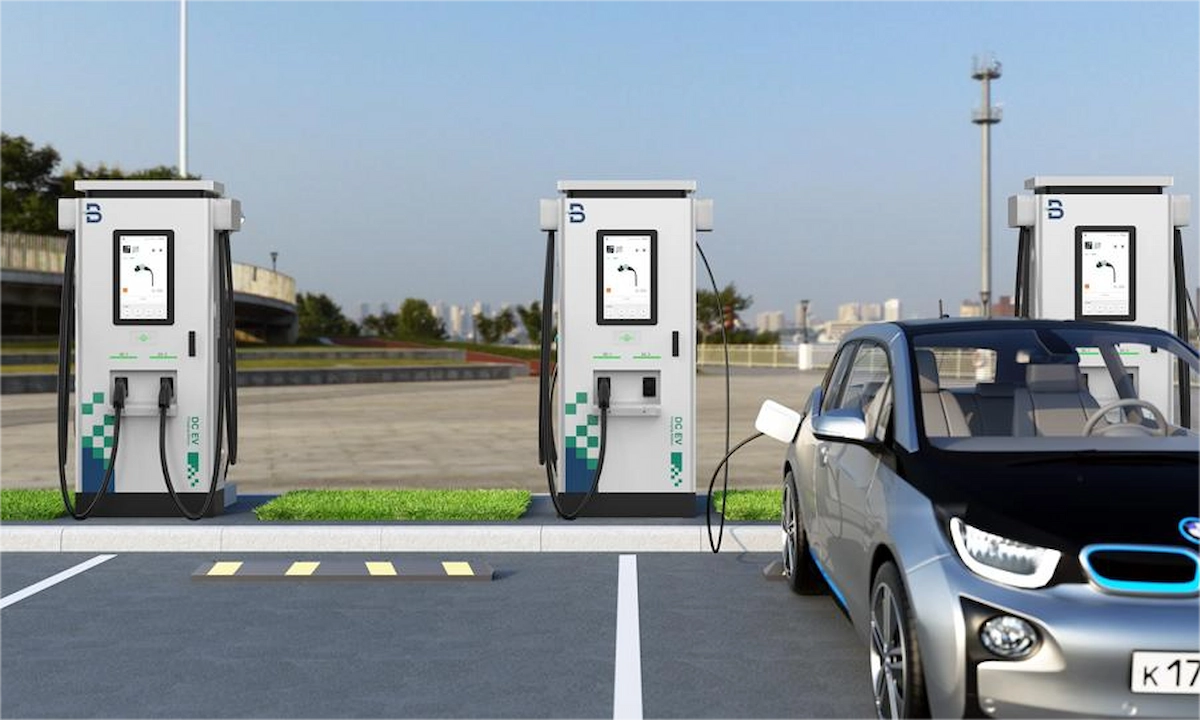
The DC equipment architectures in EVB’s range include wall-mounted, floor-mounted and split families. Mark the actual cabinet and any separate terminals on the site plan, then request noise data for the supplied configuration and its position relative to occupied rooms.
Avoid solving one problem by creating another
An acoustic treatment or altered position may affect ventilation, service access, cable routing or the approved installation arrangement. Refer proposed changes back to the equipment supplier and responsible designers before treating them as a simple finishing detail.
The same applies to operating restrictions. If a reduced-output or timed operating arrangement is proposed, establish that it is supported and understand the effect on the charging service. A noise assumption based on a restriction that staff cannot actually enforce is difficult to rely on.
Keep local planning or environmental requirements separate from the manufacturer’s product statement. The project needs the applicable local assessment; a generic equipment figure does not supply an automatic approval.
Obtain a decision that can be traced
The final record should name the equipment version, location, evidence used, relevant occupied spaces and any agreed restrictions. Identify who accepted the assessment and which questions remain open.
Where the information is insufficient, request the missing evidence or a specialist review before fixing the location. A clearly stated gap is more useful than describing a charger as “low noise” without conditions. The result should explain why the proposed arrangement is acceptable for this site, rather than relying on an adjective in a catalogue.